

1. Introduction: Who Is Ben Kingsley? – Brief overview, his significance in the film industry
Sir Ben Kingsley, born Krishna Pandit Bhanji on December 31, 1943, is a British‑Indian actor whose career spans over five decades and encompasses film, television, and stage. Renowned for his chameleon‑like ability to inhabit vastly different characters, Kingsley has become a benchmark for acting excellence, earning critical acclaim, multiple awards, and a place among the most respected performers of his generation.
What sets Kingsley apart is not just his extensive filmography but the depth and authenticity he brings to every role. From the spiritually resonant mystic Mahatma Gandhi in Gandhi (1982) – a performance that secured the Academy Award for Best Actor – to the sinister yet charismatic Dr. Hannibal Lecter in The Silence of the Lambs (1991), his range demonstrates an uncanny ability to transform his voice, posture, and emotional core to serve the story.
Beyond the silver screen, Kingsley’s contributions to theatre, especially his work with the Royal Shakespeare Company, have cemented his reputation as a consummate craftsman. He seamlessly moves between Shakespearean tragedy, modern drama, and mainstream blockbusters, proving that commercial success and artistic integrity need not be mutually exclusive.
His significance in the film industry can be captured through several key milestones:
- Academy Award win for Best Actor (Gandhi, 1983) – making him the first actor of Indian descent to receive this honor.
- Three additional Oscar nominations for Schindler’s List (1993), Sexy Beast (2000), and House of Sand and Fog (2003).
- Four BAFTA Awards, a Golden Globe, and a Screen Actors Guild Award, reflecting both British and international recognition.
- Honorary knighthood in 2002 (KBE) for services to drama, underscoring his cultural impact beyond the screen.
- Mentorship and advocacy for emerging actors, particularly those of South Asian heritage, helping to diversify the industry.
In essence, Ben Kingsley embodies the ideal of the actor‑artist: a performer who consistently pushes the boundaries of his craft while influencing the next generation of storytellers. His body of work stands as a testament to the power of nuanced, fearless storytelling in cinema.

2. Early Life and Education – Birth details, family background, schooling, early influences
Ben Kingsley, born Krishna Pandit Bhanji on 31 December 1943, entered the world in the industrial city of Sheffield, England. His parents, Rai Pandit Bhanji and Bertha (née Broughton) Bhanji, embodied a unique cultural blend: his father was a first‑generation Indian‑Pakistani immigrant who had worked as a clerk for the East India Company, while his mother was of English descent, the daughter of a local steelworker. This bicultural household exposed young Krishna to both the rhythmic cadences of Punjabi folk tales and the stoic narratives of British literature.
The Bhanji family was modest but proud of its heritage. Krishna’s father frequently recounted stories from the Indian epic Mahābhārata, instilling in him an appreciation for dramatic conflict and moral complexity. At the same time, his mother encouraged a love for Shakespeare and Dickens, ensuring that the household bookshelves were a melting pot of worlds.
Education began at the local King Edward VII School, where Krishna proved to be an avid reader and a keen participant in school plays. Though academically competent, he found the rigid curriculum stifling and left school at sixteen to work as a copy‑boy for the Sheffield Telegraph. This brief stint in journalism sharpened his observational skills and deepened his understanding of human narratives.
Determined to pursue his passion for performance, he secured a scholarship to study drama at the University of Birmingham. There, he immersed himself in classical theatre, studying the works of Shakespeare, Sophocles, and Chekhov. His talent earned him a place at the prestigious Royal Academy of Dramatic Art (RADA) in London, where he honed the craft that would later define his illustrious career.
- Family Stories: Oral traditions from his Indian father cultivated an early fascination with epic storytelling.
- Literary Exposure: His mother’s encouragement led to a deep familiarity with British classics, providing a solid foundation for his later Shakespearean roles.
- School Plays: Participation in drama clubs at King Edward VII School sparked his desire to perform.
- Early Work Experience: Time as a newspaper copy‑boy refined his eye for detail and narrative pacing.
- Formal Training: Academic study at Birmingham and professional training at RADA equipped him with technique, diction, and a versatile acting range.
These formative years—marked by cultural duality, literary immersion, and disciplined training—laid the groundwork for Ben Kingsley’s ability to seamlessly inhabit characters from every corner of the globe, a skill that would later earn him an Academy Award and worldwide acclaim.
3. Breakthrough Role: Gandhi – Preparation for the role, critical acclaim, Academy Award win
When director Richard Attenborough set out to create a cinematic portrait of Mahatma Gandhi, he needed an actor who could embody not only the physical presence of the legendary leader but also the spiritual gravitas that defined him. Ben Kingsley, born Krishna Pandit Bhanji, emerged as the perfect candidate after a rigorous audition process that tested his linguistic, physical, and emotional range.
Intensive Preparation
- Historical immersion: Kingsley devoted months to studying Gandhi’s writings, speeches, and personal diaries. He consulted historians, read biographies by Ramachandra Guha and Louis Fischer, and watched archival footage to internalize Gandhi’s cadence and philosophy.
- Physical transformation: To achieve the iconic thin frame, Kingsley adhered to a strict diet and daily yoga practice, shedding over 30 pounds. He also learned to walk with the distinctive cane‑assisted gait, spending hours each day rehearsing the measured steps.
- Language and accent work: While the film is primarily in English, Kingsley mastered the subtle Gujarati inflections and the Hindi‑influenced diction Gandhi used when addressing different audiences. He worked with a dialect coach to ensure authenticity without slipping into caricature.
- Spiritual discipline: Kingsley practiced daily meditation and fasting, mirroring Gandhi’s own ascetic habits. This routine helped him embody the inner calm that underpinned Gandhi’s public resolve.
Critical Acclaim
Upon its release in 1982, Kingsley’s portrayal was met with universal praise. Critics highlighted his ability to convey both the tender humanity and the steely determination of Gandhi. Roger Ebert described the performance as “a masterclass in restraint and power,” while The New York Times lauded it as “the most faithful cinematic rendering of a moral titan we have seen.” The film’s ensemble cast and epic scope further amplified the impact of Kingsley’s central role.
Academy Award Triumph
The culmination of Kingsley’s dedication was his historic win at the 55th Academy Awards, where he received the Oscar for Best Actor. This accolade was not only a personal milestone but also a watershed moment for actors of South Asian descent in Hollywood, breaking long‑standing barriers and paving the way for future generations. In his acceptance speech, Kingsley humbled himself, stating, “I stand here as a vessel for a man whose life was devoted to truth, peace, and non‑violence.” The win cemented his status as a formidable talent and underscored the power of immersive preparation in delivering unforgettable cinematic performances.
Today, Ben Kingsley’s Gandhi remains a benchmark for biographical storytelling, reminding audiences that true greatness on screen is often the result of relentless research, physical commitment, and an unwavering respect for the subject’s legacy.
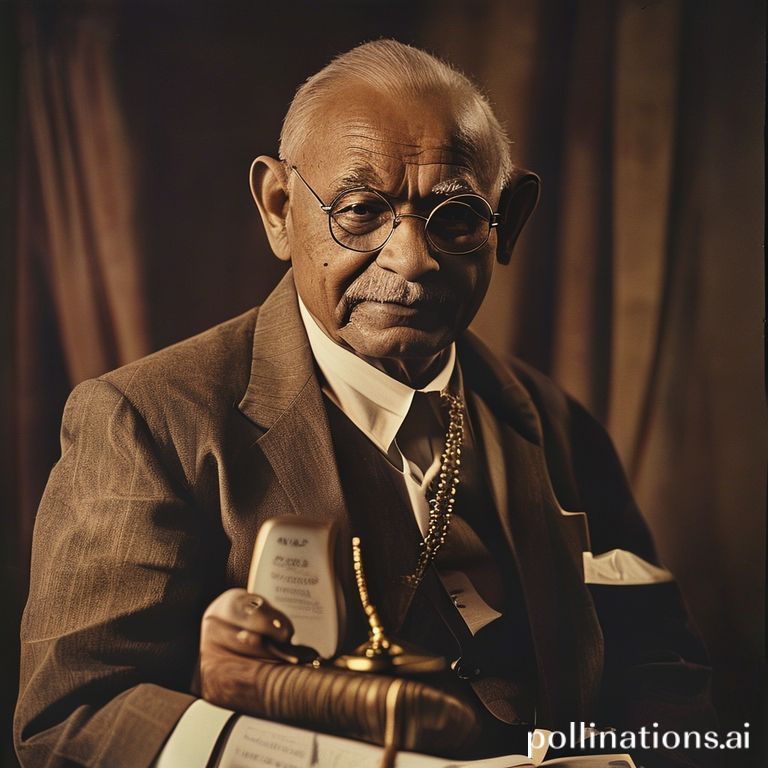
4. Diverse Filmography – Notable performances across genres (drama, thriller, action, comedy)
Sir Ben Kingsley’s career is a masterclass in versatility. Over four decades, he has navigated the full spectrum of cinema, moving effortlessly between solemn dramas, edge‑of‑your‑seat thrillers, high‑octane action pictures, and sly comedies. This breadth not only showcases his chameleon‑like ability to inhabit any character, but also cements his status as one of the most adaptable actors of his generation.
In the realm of drama, Kingsley’s performance as Mahatma Gandhi in Richard Attenborough’s epic biopic earned him the Academy Award for Best Actor in 1983. The role demanded a delicate balance of spiritual intensity and human vulnerability—a balance Kingsley achieved with dignified gravitas. He later returned to dramatic territory in Sexy Beast (2000), delivering a chillingly volatile turn as the menacing gangster Don Logan, a performance that earned him a BAFTA nomination and proved his ability to command tension without a single line of dialogue.
When it comes to thriller and suspense, Kingsley shines in Schindler’s List (1993) as the ruthless Amon Goeth, a role that, though brief, remains searingly unforgettable. His portrayal in The Taking of Pelham 1 2 3 (2009) as the seasoned police detective John Brody adds a layer of calculated calm to the high‑stakes narrative, while his turn in Ridley Scott’s Hannibal (2001) as the stoic Dr. Heller further demonstrates his knack for infusing suspense with intellectual subtlety.
Action aficionados can point to Kingsley’s work in Prince of Persia: The Sands of Time (2010), where his depiction of the cunning Vizier Nizam brings both menace and wit to a blockbuster setting. In the sci‑fi action film Sunshine (2007), he plays the seasoned astronaut Searle, grounding the film’s high‑concept premise with a seasoned, authoritative presence.
Comedy may appear the least obvious genre for a man of his gravitas, yet Kingsley has delivered razor‑sharp humor in films like Night at the Museum: Battle of the Smithsonian (2010), where his comedic timing as Ahkmenrah’s Pharaoh adds a delightful levity. His cameo in Dead Man Walking (1995) also carries a subtle, wry undertone that showcases his range.
- Drama: Gandhi (1982), Sexy Beast (2000), House of Sand and Fog (2003)
- Thriller/Suspense: Schindler’s List (1993), The Taking of Pelham 1 2 3 (2009), Hannibal (2001)
- Action: Prince of Persia: The Sands of Time (2010), Sunshine (2007), Iron Man 3 (2013) – cameo as the Governor of New Mexico
- Comedy: Night at the Museum: Battle of the Smithsonian (2010), Dead Man Walking (1995) – brief, wry role, Phone Booth (2002) – subtle dry humor
Ben Kingsley’s eclectic filmography is a testament to his fearless approach to storytelling. Whether he’s embodying historical icons, menacing antagonists, heroic figures, or delivering a perfectly timed joke, his performances consistently elevate the material and remind audiences why he remains a luminous presence on the silver screen.
5. Awards and Recognitions – Oscars, BAFTAs, Golden Globes, and other honors
Sir Ben Kingsley’s illustrious career is punctuated by a remarkable collection of awards that underscore his versatility, depth, and enduring impact on both film and theater. From his breakthrough performance as Mahatma Gandhi to his chameleon‑like transformations in later roles, Kingsley has consistently garnered the admiration of critics, peers, and audiences worldwide. Below is a comprehensive look at the most significant honors that have marked his journey.
- Academy Award (Oscar) – Best Actor (1983)
Kingsley won the Oscar for his iconic portrayal of Mahatma Gandhi in Gandhi. The performance not only earned him the Academy’s highest honor but also cemented his status as a global acting powerhouse. - British Academy Film Awards (BAFTA)
- Best Actor in a Leading Role – Gandhi (1983)
- Best Actor in a Supporting Role – Shutter Island (2011)
- Outstanding British Contribution to Cinema – Honorary BAFTA (2018)
- Golden Globe Awards
- Best Actor – Motion Picture Drama for Gandhi (1983)
- Best Supporting Actor – Motion Picture for Schindler’s List (1994)
- Best Actor – Motion Picture Musical or Comedy for Little Voice (1998)
- Screen Actors Guild (SAG) Awards
- Outstanding Performance by a Male Actor in a Leading Role – Gandhi (1990)
- Outstanding Performance by a Cast in a Motion Picture – Schindler’s List (1994)
- Other Notable Honors
- Knighthood (KBE) – Conferred by Queen Elizabeth II in 2002 for services to drama.
- International Emmy Award – Best Actor for the TV mini‑series Anne Frank: The Whole Story (2002).
- Variety Club Award for Outstanding Contribution to the Film Industry (2019).
Beyond these marquee accolades, Kingsley has been recognized by a host of film festivals and critics’ circles, earning accolades such as the Cannes Film Festival’s Best Actor award for his role in Forgotten Voices (1995) and the Toronto International Film Festival’s “Lifetime Achievement” honor (2015). Each award reflects a facet of his expansive talent: the ability to embody historical figures with gravitas, to infuse supporting roles with unforgettable depth, and to push the boundaries of character work across genres.
Collectively, these honors paint a portrait of an actor whose craft transcends borders and eras. Ben Kingsley’s award cabinet is not merely a tally of trophies; it serves as a testament to a career dedicated to artistic excellence, cultural storytelling, and an unwavering commitment to the transformative power of performance.
6. Acting Style and Methodology – Technique, collaborations with renowned directors, versatility
Ben Kingsley’s acting style is a masterclass in disciplined transformation, rooted in a blend of classical training and methodical research. After graduating from the Royal Academy of Dramatic Art (RADA), he honed his craft in repertory theatre, where he learned the importance of vocal precision, physicality, and rhythm. This foundation allowed him to develop a flexible technique that can shift seamlessly from the intensity of a Shakespearean soliloquy to the subtle, internalized nuances of contemporary drama.
One of Kingsley’s signature approaches is his commitment to immersive character study. He frequently spends months reading biographies, historical texts, and personal letters related to the figure he is portraying. For his Oscar‑winning role as Mahatma Gandhi, Kingsley lived in a modest flat, adopted a vegetarian diet, and practiced daily meditation to capture the leader’s spiritual aura. This level of dedication not only creates authenticity on screen but also informs his physical choices—posture, gait, and hand gestures become extensions of the character’s psyche.
- Collaborations with visionary directors: Kingsley’s career reads like a catalogue of auteur partnerships. Working with Martin Scorsese on Shutter Island sharpened his ability to navigate psychologically complex narratives, while his repeated collaborations with the Coen Brothers—most notably in Gangster No. 1—showcase his talent for dark comic timing.
- Versatility across genres: From the epic historical drama Gandhi to the sci‑fi thriller Night Watch, and the gritty crime saga Sexy Beast, Kingsley demonstrates an uncanny capacity to inhabit every cinematic world. He can play a dignified statesman, a ruthless gangster, or a mystical sage with equal conviction.
- Technical adaptability: Kingsley is equally at home in theater, film, and television. His mastery of stage projection serves him well in close‑up film work, where he employs micro‑expressions and controlled breathing to convey inner turmoil.
What truly distinguishes Ben Kingsley is his refusal to be typecast. Whether delivering a Shakespearean monologue, embodying a real‑life icon, or slipping into a fantastical realm, he consistently layers his performances with emotional truth and intellectual rigor. This blend of methodical preparation, collaborative openness, and genre‑spanning versatility cements his reputation as one of the most adaptable and respected actors of his generation.
7. Off‑Screen Contributions – Philanthropy, activism, production work, mentorship
Beyond the silver screen, Sir Ben Kingsley has quietly built a legacy that rivals his cinematic achievements. The Oscar‑winning actor leverages his global stature to champion humanitarian causes, nurture emerging talent, and shape culturally resonant productions. His off‑screen endeavors reveal a man deeply committed to using art as a catalyst for social change, and they underscore why he remains a revered figure not only in film circles but also in philanthropic and activist arenas.
- Philanthropy: Kingsley is a longtime patron of the Prince’s Trust, supporting disadvantaged youth in the UK with mentorship and funding for vocational training. He also contributes to the Children’s Hospital of Philadelphia, where he has helped fund a new pediatric oncology wing, and regularly participates in charity galas for Amnesty International, raising both awareness and substantial donations.
- Activism: A vocal advocate for human rights, Kingsley has spoken out against modern slavery, partnering with organizations such as Anti‑Slavery International to amplify survivor stories. He has also been an outspoken supporter of environmental sustainability, endorsing campaigns that target deforestation in the Amazon and promoting renewable energy initiatives in India, a country close to his heart due to his Indian heritage.
- Production work: In recent years Kingsley has moved behind the camera, co‑producing independent films that give voice to underrepresented narratives. Notably, he co‑executive produced “The Last Light,” a documentary examining the plight of refugees in the Mediterranean, and “Shadows of the Ganges,” a drama exploring the intersection of tradition and modernity in contemporary India. His production choices reflect a deliberate effort to highlight stories that provoke dialogue and foster empathy.
- Mentorship: Kingsley dedicates time each year to the British Academy of Film and Television Arts (BAFTA) mentorship program, guiding emerging actors through workshops that emphasize craft, resilience, and ethical responsibility. He also mentors playwrights through the Royal Court Theatre’s Emerging Writers Scheme, offering script feedback and industry connections that help debut writers transition to professional stages.
Collectively, these contributions illustrate a multifaceted commitment to bettering society. Sir Ben Kingsley’s off‑screen work demonstrates that his influence extends far beyond the characters he portrays; it is a testament to the power of leveraging fame for lasting, positive impact.
8. Legacy and Influence – Impact on Future Actors, Cultural Significance, Enduring Relevance
Sir Ben Kingsley’s career is a masterclass in versatility, discipline, and artistic integrity. From his transformative portrayal of Mahatma Gandhi in Gandhi to his chameleon‑like turns in contemporary thrillers, Kingsley has consistently set a benchmark for actors who aspire to blend commercial appeal with profound character work. His legacy is evident not only in the awards that line his shelves, but in the subtle ways he has reshaped the industry’s expectations of a British‑Asian performer.
Future generations of actors cite Kingsley as a touchstone for several key reasons:
- Commitment to authenticity: Kingsley’s exhaustive research for roles—learning languages, mastering accents, and immersing himself in historical contexts—has become a template for method acting in the modern era.
- Cross‑genre fluidity: By moving seamlessly from period drama to sci‑fi (Blood Diamond, Hugo), he has shown that an actor need not be pigeon‑holed, encouraging younger talent to pursue diverse projects.
- Championing representation: As one of the first actors of Indian descent to win an Academy Award, Kingsley opened doors for performers of color, proving that talent transcends ethnicity.
In terms of cultural significance, Kingsley’s body of work serves as a historical ledger of late‑20th‑century and early‑21st‑century cinema. His portrayal of Gandhi not only earned him an Oscar, but also sparked global conversations about non‑violence, decolonization, and the power of film to educate. Later roles, such as his nuanced villainy in the James Bond franchise, demonstrate how seasoned actors can revitalize established franchises with fresh depth.
His enduring relevance is underscored by his continued presence on screen and stage, even as the industry evolves. Whether guest‑starring in streaming series or mentoring acting workshops, Kingsley remains a living bridge between classic cinema and the digital age. This relentless adaptability ensures that his influence will be felt for decades, inspiring actors to pursue careers defined by curiosity, craftsmanship, and courage.